2026 payments; 2027 filing
Wrong Payer Name or TIN on a Filed 1099: Avoid the Wrong Correction
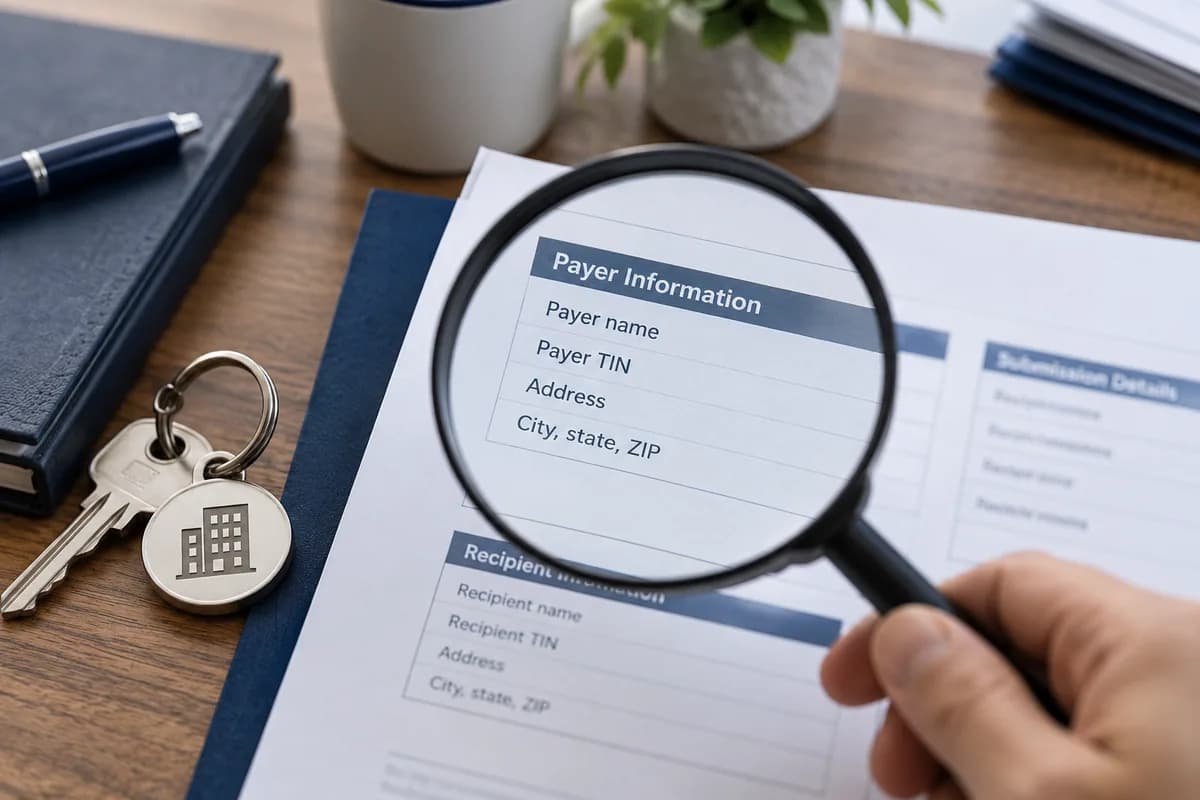
A wrong payer name or taxpayer identification number can affect the identity of the business reporting the payment. Before preparing a corrected 1099, distinguish that problem from a recipient-name or recipient-TIN error. A procedure intended to fix the payee should not be used automatically to change the filer.
Source review: · Updated
 Filing guide
In this guide
A wrong payer name or taxpayer identification number can affect the identity of the business reporting the payment. Before preparing a corrected 1099, distinguish that problem from a recipient-name or recipient-TIN error. A procedure intended to fix the payee should not be used automatically to change the filer.
Begin by confirming exactly what was submitted and which field is wrong. A current account profile or an edited PDF may differ from the accepted return. Preserve the original filing evidence before making further changes.
Identify the kind of payer problem
Compare the accepted payer name, TIN and address with the business's verified tax records. Determine whether the issue is a spelling error, a trading name used in place of the required legal name, a wrong number or reporting under a different legal entity.
These scenarios can have different implications. If one company paid the vendor but another company's identity appeared on the return, the question includes who should have reported the payment. If the business changed ownership or reorganized, determine the responsible payer for the relevant payments before assuming a simple profile update resolves the matter.
A recipient error belongs in a separate review. Mark the payer fields and recipient fields clearly in the issue packet so the person handling it does not mistake one for the other.
Use current guidance for the actual filing channel
The 2026 Publication 1099, Part H, directs payer-information corrections to Publication 5718. It does not provide a universal instruction to mail a payer-correction letter. Its electronic-filing section also distinguishes IRIS A2A guidance from the Taxpayer Portal guidance.
The January 2026 Publication 5718 presents ordinary A2A corrections with the original issuer header preserved. That instruction is an important warning against assuming an ordinary record correction can simply replace the payer identity. The retrieved edition addresses processing year 2026; verify the current processing-year guidance and obtain channel-specific instructions for a 2027 issue.
If the published procedure does not clearly address the exact payer error, contact the filing provider's technical support or the appropriate IRS information-return support channel identified on IRS.gov. Provide the filing facts and ask for the applicable process. Do not choose a mailing address from an older article or improvise a two-return sequence.
Prepare an escalation packet
Include:
- The form, tax year and original filing channel.
- The payer information exactly as submitted and the verified intended information.
- The agency acknowledgment and relevant submission or record identifiers.
- The number of affected returns and whether they share one erroneous payer record.
- Any earlier corrections and their outcomes.
- The records establishing who made the payments and should report them.
- The status of recipient statements and any affected state reporting.
Use a secure, verified method to provide full taxpayer information. Keep a dated record of the instructions received and identify who approved the next action.
A hypothetical entity mix-up
Two related companies share a bookkeeper. Company North made the payments, but the accepted NEC batch shows Company South's name and EIN. The bookkeeper notices the issue after changing the default payer in the preparation account.
Changing the account back prevents further mistakes but does not establish that the accepted batch has changed. The bookkeeper isolates the affected returns, preserves their acknowledgments, confirms the payment records and requests the current payer-identity procedure. The team avoids sending another batch under Company North until the required sequence is established.
Keep the transition and follow-up visible
FIRE production submissions end November 19, 2026, at 3 p.m. Eastern time under the IRS transition announcement. Older instructions relying on later access to FIRE need current review. State corrections and recipient communications also require attention once the federal handling is determined.
For a filing made through E-File Magic, select the original filer and year, open an affected recipient and review IRS Events. Use History → View released PDF to check the payer information saved with the order. Then open signed-in Help and explain the payer error, form type, tax year, order number and number of affected returns. Leave full Tax IDs out of ordinary support messages.
Follow the E-File Magic payer-identity guide for that review. Editing the filer profile does not correct an accepted filing, and an ordinary recipient amount correction is not a substitute for resolving the payer error. Keep the original evidence and document the resulting action and recipient or state follow-up. If the original was filed elsewhere, contact its original provider.
General federal filing information. Review current instructions and obtain advice for your specific facts.
PUT YOUR GUIDE INTO PRACTICE
Put your filing plan into practice.
Start with your reviewed records, or contact our team to confirm the services your filing needs.
The official reference
IRS instructions for this guide
Preview here, or save a copy for later.
Publication 1099 — General Instructions for Certain Information Returns
2026 editionPDF · 1416 KB
Need another form or year? Explore the full library. Edition dates reflect the IRS publication and may differ from the tax year.
Sources & further reading
Official references used in this guide. Check the applicable form revision and current instructions for your filing year.